
.svg)
The 1-Bedroom Villa: Why the Numbers Are Starting to Make Sense
May 15 2026
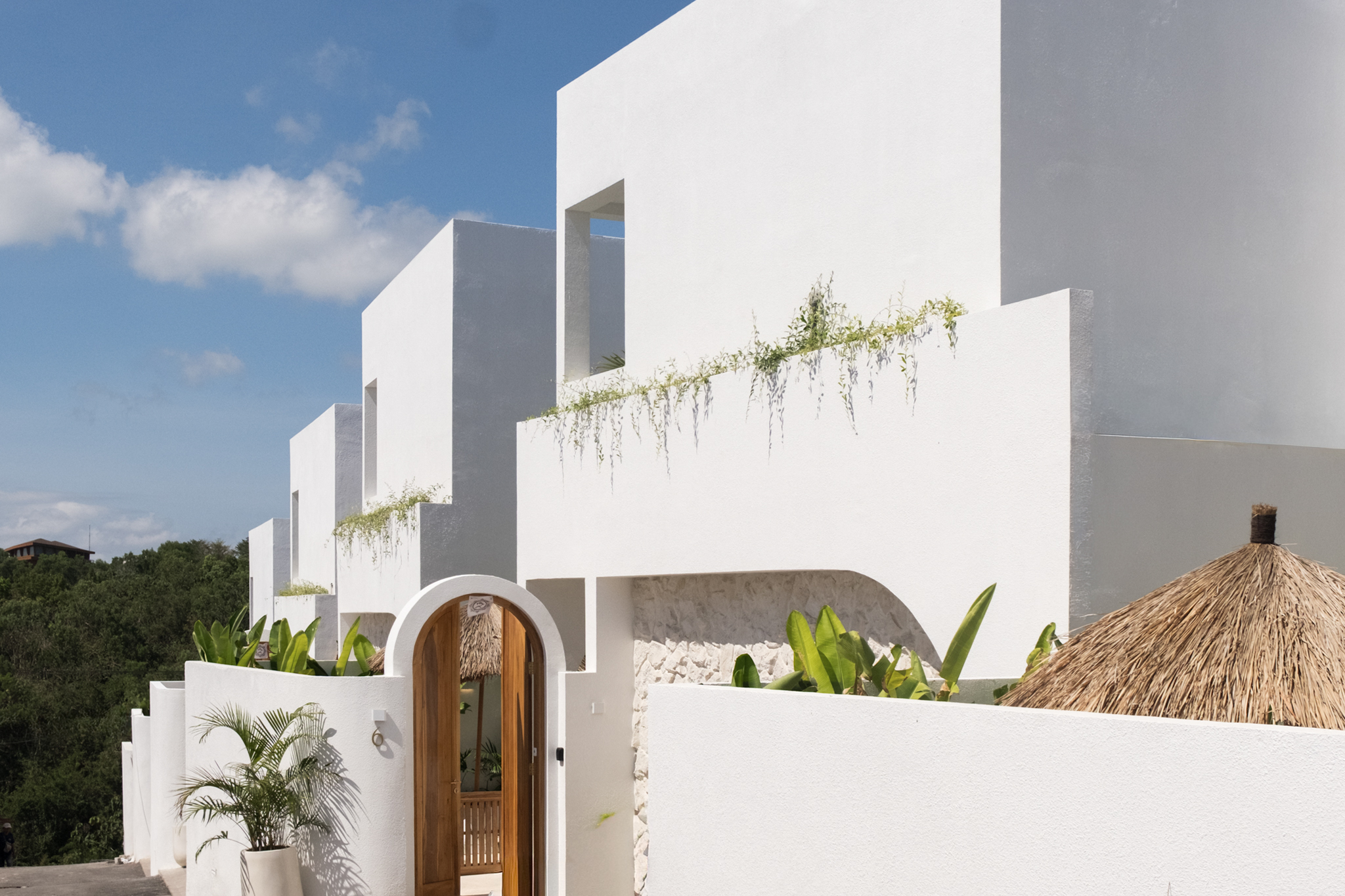
For years, 3-bedroom was the default Bali investment format. The data is starting to shift that conversation.
What the market is actually showing
One and two-bedroom villas now account for over 62% of property sales in Bali, with average build sizes trending smaller year-on-year. That's not a blip — it's a sustained market signal that investors and developers are responding to changing demand.
The more interesting data point is on the rental side. Despite supply across Bali growing by over 100% in three years, occupancy rates have continued to improve. And within that market, smaller villa formats — particularly 1-bedrooms — are among the strongest performers on a yield-percentage basis, especially in South Badung and the Uluwatu corridor. At the same time, 1-bedroom supply remains relatively limited: 3-bedroom properties still dominate the listing pool. That gap between demand performance and available supply is where the investment case sits.
Why 1-bedrooms perform
The Bali guest profile has broadened. Couples, solo travellers, remote workers on longer stays, and lifestyle travellers who are visiting specifically for surf, wellness, or the Bukit experience — none of these guests need a 4-bedroom villa, and many actively prefer something more intimate. What they do want is design quality, privacy, a pool, and a location that delivers on the reason they came to Bali in the first place.
A well-positioned 1-bedroom in Uluwatu or Bingin — designed with that guest in mind, properly managed, priced right — can match or exceed the ROI percentage of a larger villa while requiring a lower capital outlay. The operational picture is simpler too: lower staffing requirements, shorter turnaround between guests, and lower maintenance costs all contribute to the net yield story.
Smaller villas also tend to have more booking flexibility. Couples and pairs fill a 1-bedroom easily; filling a 4-bedroom requires assembling a group, which adds friction and extends the booking window.
Where larger villas still win
This isn't an argument that 1-bedrooms are always the right format — they're not.
Families and group travellers remain a major segment of Bali's short-stay market, and for many locations the 3-bedroom product is still the highest-demand format. Owners who intend to use the property themselves will usually prefer more space. And in certain luxury segments and oceanfront positions on the Bukit, a premium 3 or 4-bedroom commands nightly rates that are simply not replicable at smaller scale.
The right format depends on location, target guest, and what the land economics support. A 1-bedroom on a large land holding in a strong location may be the wrong use of the site. A 1-bedroom on a compact leasehold in a high-demand area with strong design — that's a different calculation.
What this means if you're building on the Bukit
The Uluwatu and Bingin market has some specific characteristics worth understanding. Uluwatu land is roughly 40% cheaper than Canggu, yet cliff-front and premium properties achieve some of the highest nightly rates on the island — creating a wider margin for both capital appreciation and rental yield. That land cost advantage changes the 1-bedroom maths considerably compared to a Canggu or Seminyak site. Bali Real Estate
At Bali Spaces, most of what we build on the Bukit is in the 1 to 3-bedroom range. We've seen firsthand how a well-conceived 1-bedroom — the right design, the right location, the right management partnership — performs against larger properties in the same area. It's not always the answer, but it's worth running the numbers seriously before defaulting to bigger.
If you're working through the format question on a Bukit project, we're happy to walk through what the data looks like for your specific site and budget.

.jpg)
.jpg)