
.svg)
Bingin vs Pererenan: What Actually Separates Bali's Villa Micro-Markets
21 July 2026

Almost every piece of villa investment content lumps the whole southern peninsulainto "Uluwatu," and treats Pererenan as an interchangeable Canggu suburb. That’sa shortcut a writer takes when they’ve never stood in any of these places with atape measure and a contractor. We build in four of them — Bingin, Padang Padang, Suluban and Pererenan — and they don’t behave the same way, for reasons that have nothing to do with which beach photographs better.
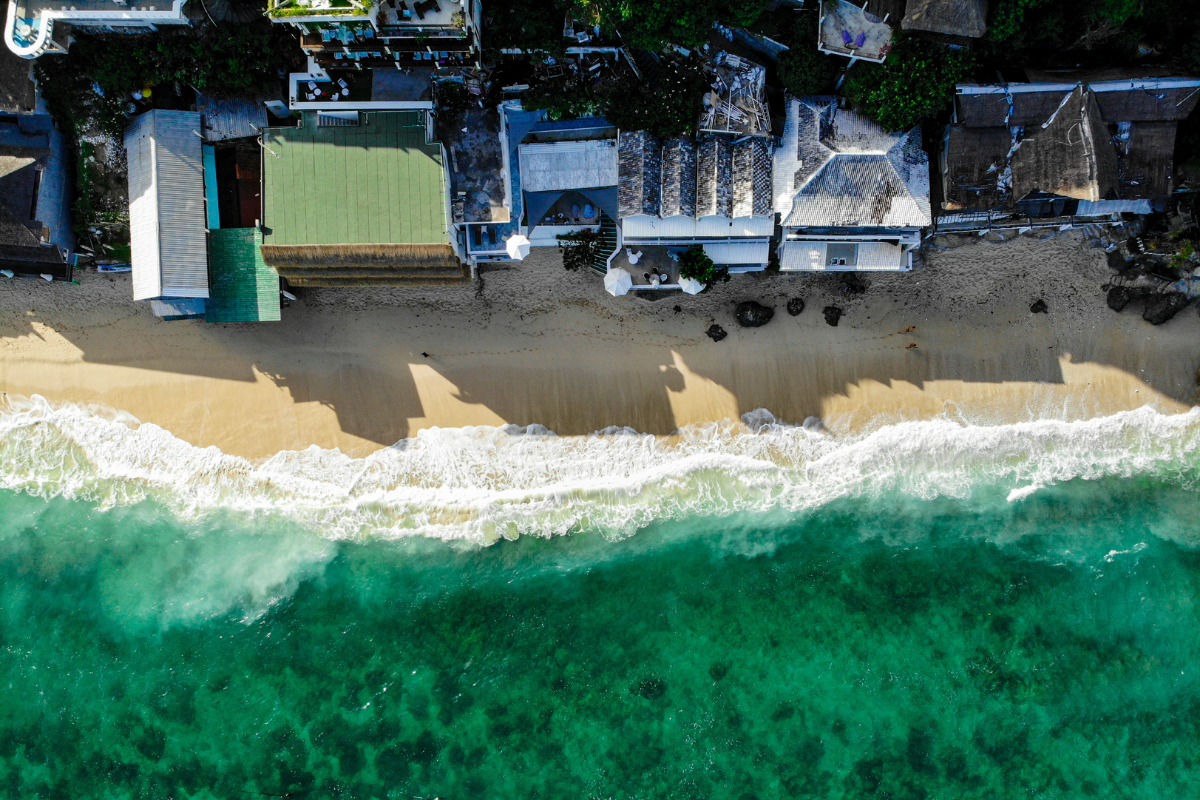
Bingin is a cliff-top strip with a stair-access surf beach below it. It’s walkable in away most of the Bukit isn’t — warungs, small hotels and villas are close enough together that guests move around on foot after dark, which matters more to booking behaviour than people assume. The area has shifted over the past decade from a backpacker surf stop to a mixed boutique market, but the surf crowd never left; it just now shares the strip with a more design-conscious guest. Booking lead times here skew shorter and more weather-reactive than other areas, because a meaningful share of demand is still surf-driven — guests watch a swell forecast, then book.
Padang Padang sits around the most photographed beach on the peninsula, which cuts both ways. It has the strongest name recognition of the four, which helps direct bookings and search visibility — but that same recognition has pulled in large-scale resort development that a private villa doesn’t compete with on amenities. A villa here is selling privacy and location against a neighbour that’s selling a pool bar and a spa menu. Site access can also be tighter than it looks on a map: the roads that made the beach famous weren’t built with construction trucks in mind, and that shapes what’s practical to build and how long it takes.
Suluban is quieter and less walkable than Bingin — cliffside, surf-break-adjacent,without Bingin’s density of small businesses at street level. That works against casual footfall but works for a specific guest: longer-stay surfers and remote workers who came for the break and the quiet, not for a strip to wander. Less competitive noise here also means less of the discounting pressure that comes with a dense cluster of similar listings fighting for the same search terms. It also tends to attract a more repeat-guest pattern — people who found it once and come back rather than shopping around each trip.
Pererenan isn’t the Bukit at all — it’s flat, ricefield-adjacent, and calmer water than any of the cliff locations, which changes the guest profile more than anything else on this list. It attracts a family and wellness-leaning market rather than a surf one, with average stays that tend to run longer. Road infrastructure in the area is still catching up to demand, which is a real logistics factor for both construction and daily villa operations — deliveries, staff commute, guest transfers — that a location description on a listing site won’t mention. The flat terrain also means a fundamentally different build: no cliff engineering, but its own site-prep questions around drainage and soil condition near the fields.
That’s the part only an operator sees: these four places aren’t different flavours ofthe same product. They’re selling to different guests, on different booking horizons, against different competition, built on different ground. A generic "Uluwatu villa" pitch flattens all of that into one adjective — stunning — and tells a buyer nothing they can actually act on.
For context: AirROI’s tracked short-term rental data doesn’t do much better. Its "Uluwatu" category — which still doesn’t separate Bingin, Padang Padang or Suluban — shows 47.5% occupancy and a $246 average daily rate across 86 active listings in the year to June 2026. The wider Canggu area, tracked separately across 3,988 listings over the same period, ran cooler: 37.5% occupancy at $215 ADR. Pererenan doesn’t appear as its own neighbourhood in that dataset at all — not folded into Canggu, just absent. Even the platforms built to measure this market haven’t caught up to it yet.
What actually drives the difference
Strip away the marketing language and three things separate these locations inpractice. The first is guest type: surf-driven demand (Bingin, Suluban) behaves differently from wellness-and-family demand (Pererenan) or destination-driven demand (Padang Padang) — different booking lead times, different length of stay, different sensitivity to swell forecasts versus school holidays. The second is competitive density: a cliff strip with dozens of similar listings within walking distance creates different pricing dynamics than a quieter break with fewer direct comparisons a guest can pull up side by side. The third is physical reality — cliff engineering and access logistics on the Bukit versus flat-site drainage and developing road infrastructure in Pererenan aren’t cosmetic differences, they’re structural ones that shape what gets built and how.
None of these three factors show up in a location pin on a map. They show up insite visits, in construction timelines, and in which guests keep coming back — the kind of thing you only know by having built and operated in all four places, not by having read about them.
What this means if you’re choosing a location
The question worth asking isn’t which of these four places is "best" — that’s not a question with one answer, because they’re not competing for the same guest. The more useful question is which guest profile a location attracts, and whether that guest profile suits a calmer or spikier demand pattern. A surf break brings weather-reactive, shorter-lead-time bookings and a guest who already knows exactly what they want. A rice field brings longer stays and a guest choosing on privacy and quiet rather than proximity to a break or a beach. A landmark beach brings name recognition and also brings the competition that comes with it. Both physical conditions and guest type belong in that decision — not just which photograph looks best on a listing page.
Sources:
AirROI, "Uluwatu" market data (Bingin, Padang Padang and Suluban combined— not tracked separately): 47.5% occupancy, $246 average daily rate, 86 activelistings, trailing twelve months to June 2026.
AirROI, "Canggu" market data: 37.5% occupancy, $215 average daily rate,3,988 active listings, trailing twelve months to June 2026.
.jpg)
.jpg)